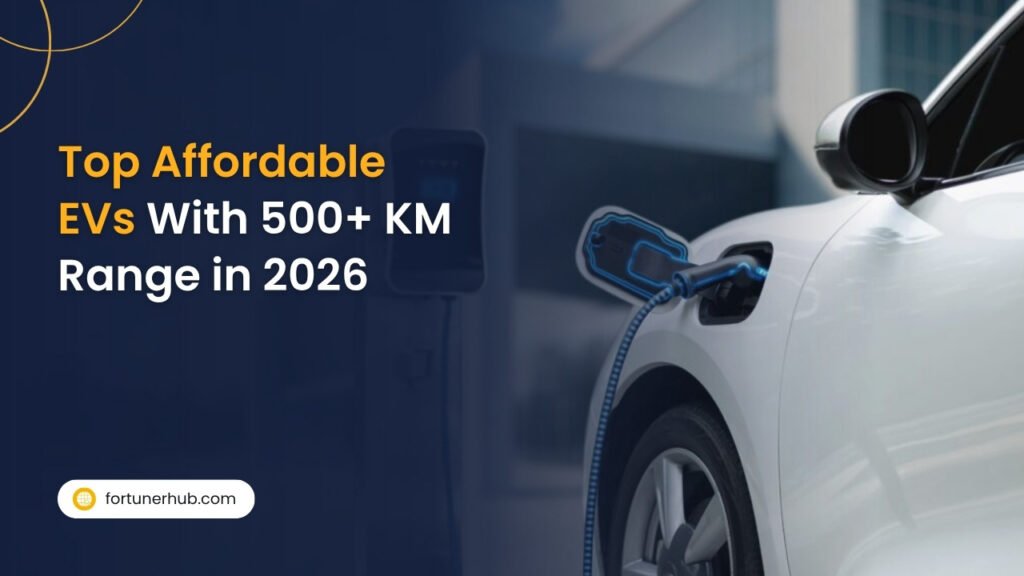
The electric vehicle revolution has entered a new phase in 2026, where long-range driving is no longer reserved for premium cars. A growing number of Affordable EVs are now offering over 500 kilometers of range on a single charge, making electric mobility practical, accessible, and appealing to a wider audience. This shift marks a significant milestone in the global transition toward cleaner transportation, especially in markets like India where price sensitivity plays a major role in purchase decisions.
The Evolution of Affordable EVs
Just a few years ago, electric vehicles with a range of over 500 km were considered luxury products. High battery costs and limited technology made it difficult for automakers to deliver both range and affordability. However, rapid advancements in battery chemistry, manufacturing scale, and vehicle design have changed the game.
Today’s Affordable EVs benefit from improved lithium-ion and lithium iron phosphate (LFP) battery technologies, which offer better efficiency, longer lifespan, and lower production costs. Automakers are also optimizing aerodynamics, reducing vehicle weight, and enhancing software systems to maximize range without significantly increasing costs.
Top Affordable EV Cars with 500+ KM Range in 2026
Here are some of the most notable models in 2026 that combine affordability with impressive driving range:
1. Tata Curvv EV –
A standout in the Indian market, the Curvv EV offers a claimed range of around 550–585 km. It blends futuristic styling with practicality, making it a strong option for both city and highway driving.
2. Mahindra BE 6 –
Built on Mahindra’s dedicated EV platform, this model delivers an impressive range of up to 680 km. It is designed to appeal to buyers looking for performance, space, and cutting-edge features.
3. Mahindra XEV 9e –
Another strong offering from Mahindra, the XEV 9e provides over 650 km range and focuses on comfort, technology, and long-distance capability.
4. BYD Atto 3 –
A global player, BYD continues to dominate with reliable EVs. The Atto 3 offers over 500 km range along with premium interiors and advanced safety features.
5. Hyundai Kona Electric –
A proven performer in the EV space, the Kona Electric remains a dependable choice, offering close to or slightly above 500 km range in updated variants.
These models highlight how Affordable EVs are no longer basic or limited—they are well-equipped, stylish, and capable of meeting modern driving needs.
Why 500+ KM Range Matters
Crossing the 500 km range threshold is a major achievement for electric vehicles. It significantly reduces range anxiety, which has been one of the biggest barriers to EV adoption. With this level of range, drivers can complete most daily commutes for several days without charging and even undertake long road trips with minimal planning.
For Indian consumers, where intercity travel is common, this extended range makes Affordable EVs a practical alternative to petrol and diesel vehicles. It also aligns with the growing availability of fast-charging infrastructure across highways and urban centers.
Cost Advantages of Affordable EVs
One of the biggest advantages of switching to electric vehicles is the reduction in running costs. Charging an EV is significantly cheaper than refueling a conventional car, especially when done at home. Electricity costs per kilometer are far lower compared to petrol or diesel.
Maintenance costs are also reduced, as EVs have fewer moving parts. There is no need for engine oil changes, and components like brakes last longer due to regenerative braking systems. Over time, these savings make Affordable EVs a financially smart choice for consumers.
Additionally, government incentives and subsidies in many regions further reduce the effective purchase price, making EVs even more accessible.
Charging Infrastructure: A Key Enabler
The expansion of charging infrastructure has played a crucial role in the adoption of long-range EVs. In 2026, public charging stations are becoming more widespread, particularly in urban areas and along major highways.
Fast chargers can now provide significant range in a short amount of time, making long-distance travel more convenient. For owners of Affordable EVs, this means greater flexibility and confidence in using their vehicles for both daily commuting and extended journeys.
Private players, oil companies, and government initiatives are all contributing to the growth of charging networks, ensuring that EV adoption continues to accelerate.
Technology Driving the Shift
Modern EVs are not just about batteries—they are powered by advanced technology that enhances efficiency and user experience. Features such as regenerative braking, smart energy management systems, and connected car technology are becoming standard even in Affordable EVs.
Software plays a crucial role in optimizing performance, monitoring battery health, and improving overall driving efficiency. Many EVs also come with smartphone integration, remote diagnostics, and over-the-air updates, ensuring that vehicles remain up to date with the latest features.
Environmental Impact
The rise of Affordable EVs is also contributing to environmental sustainability. Electric vehicles produce zero tailpipe emissions, helping reduce air pollution in cities. As renewable energy sources become more prevalent, the overall carbon footprint of EVs is expected to decrease further.
Governments around the world are encouraging EV adoption through stricter emission norms and incentives, making electric mobility a key part of future transportation strategies.
Challenges and Considerations
Despite the progress, there are still challenges to address. The upfront cost of EVs, although decreasing, can still be higher than traditional vehicles. Charging infrastructure, while expanding, is not yet evenly distributed across all regions.
Battery recycling and disposal also remain important concerns that need to be addressed as EV adoption grows. However, ongoing research and policy support are expected to resolve these issues over time.
The Future of Affordable EVs
The future of electric mobility looks promising, with continuous advancements in battery technology and vehicle design. Innovations such as solid-state batteries and ultra-fast charging could further improve range and reduce charging times.
As competition intensifies, automakers will continue to push the boundaries of what Affordable EVs can offer. Consumers can expect better performance, longer range, and more features at increasingly competitive prices.
Conclusion – Top Affordable EV Cars with 500+ KM Range in 2026
The year 2026 marks a turning point for electric vehicles, as long-range capability becomes accessible to the mass market. With multiple models offering over 500 km range, EVs are no longer a compromise but a compelling alternative to traditional cars.
For consumers, Affordable EVs represent a smarter, more sustainable choice—combining lower costs, advanced technology, and environmental benefits. As the ecosystem continues to evolve, these vehicles are set to become the new standard in personal transportation, driving the world toward a cleaner and more efficient future.