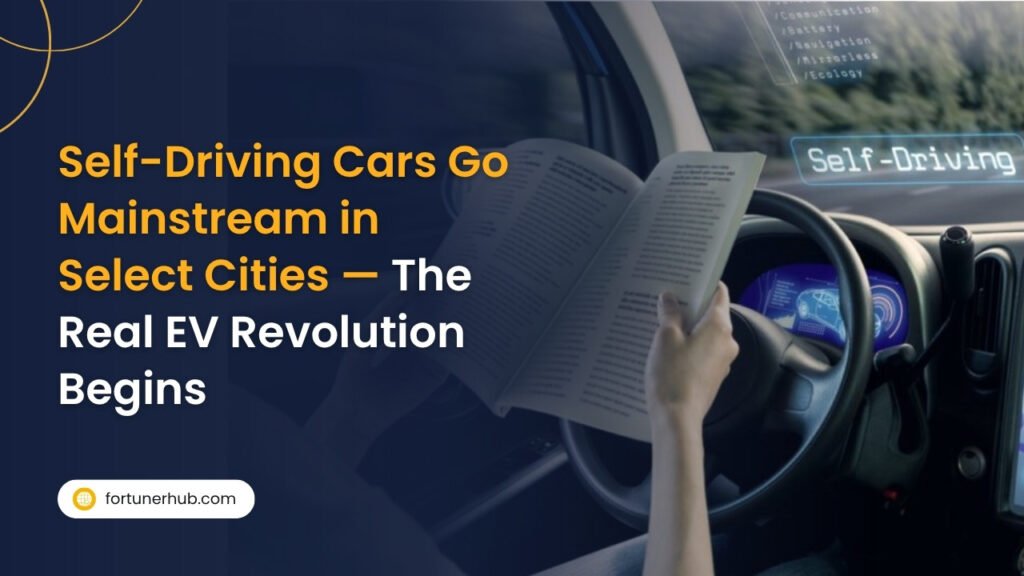
The era of autonomous mobility is no longer a futuristic promise—it is becoming a daily reality. In major urban hubs like San Francisco, Phoenix, and Shanghai, self-driving cars are now operating on public roads, marking a major milestone in the evolution of transportation. This shift signals what many experts are calling the true beginning of the electric vehicle revolution.
Leading the charge are companies like Waymo, Tesla, and Baidu, which have been aggressively testing and deploying autonomous vehicle fleets. Waymo, a subsidiary of Alphabet Inc., has already expanded its robotaxi services, offering fully driverless rides to the public in select regions. Meanwhile, Tesla continues to refine its Full Self-Driving (FSD) technology, aiming to scale autonomy across its global user base.
Urban Rollouts Gain Momentum
In San Francisco, robotaxis have become increasingly visible, navigating complex traffic scenarios without human intervention. Similarly, Phoenix has emerged as a testing ground for autonomous fleets due to its favorable weather and infrastructure. In Asia, Baidu’s Apollo Go service in Shanghai is rapidly scaling, offering thousands of rides daily.
These deployments are not just technological showcases—they are reshaping urban mobility. Reduced human error, optimized traffic flow, and increased accessibility are among the key benefits driving adoption.
The EV Connection
What sets this transformation apart is its deep connection with electric vehicles. Most self-driving cars are powered by electricity, aligning with global sustainability goals. Autonomous EVs are expected to lower emissions, reduce congestion, and improve energy efficiency, especially when integrated with smart city infrastructure.
Industry analysts believe that autonomy will accelerate EV adoption by making car ownership less necessary. Shared autonomous fleets could soon replace private vehicles, particularly in densely populated cities.
Challenges Remain
Despite the progress, challenges persist. Regulatory hurdles, safety concerns, and ethical questions around AI decision-making continue to spark debate. High-profile incidents involving autonomous systems have also slowed public trust in some regions.
However, advancements in AI, sensor technology, and real-world testing are steadily addressing these issues. Governments and companies are collaborating to establish clearer guidelines and safety standards.
As self-driving cars become more mainstream, the transportation landscape is undergoing a fundamental shift. The convergence of autonomy and electrification is not just transforming how people travel—it is redefining the future of mobility itself.