
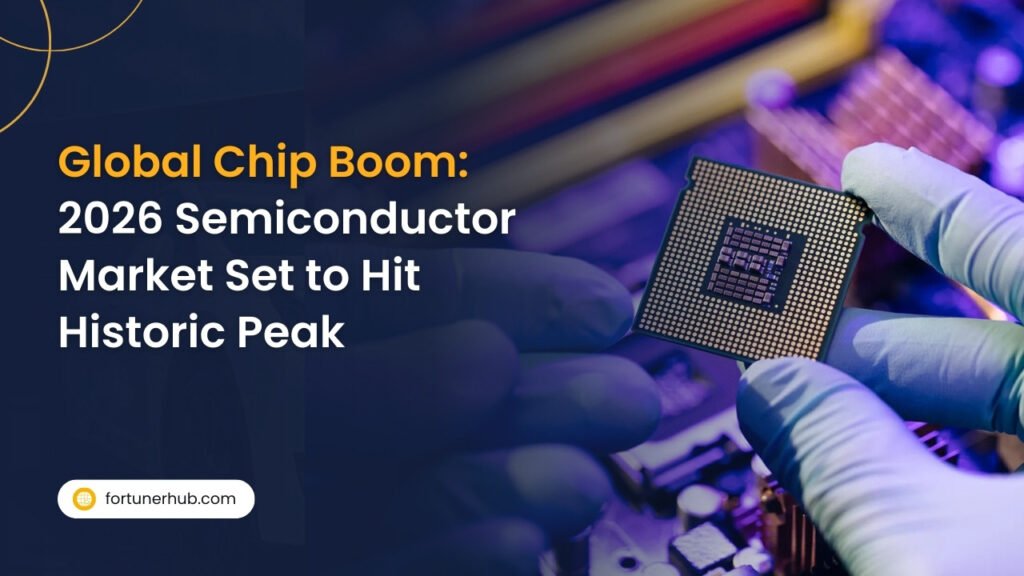
The global semiconductor market is on track to reach a historic high in 2026, fueled by surging demand for artificial intelligence (AI), electric vehicles (EVs), advanced smartphones, and next-generation data centers. Industry analysts predict that the global chip industry will surpass previous revenue records, marking a new era of growth and strategic competition among leading economies.
According to projections from the Semiconductor Industry Association and market intelligence firm Gartner, worldwide semiconductor revenue could cross the $700 billion mark in 2026, reflecting strong double-digit growth compared to 2025. The rebound comes after cyclical slowdowns in memory chips and consumer electronics during previous years.
AI and Data Centers Fuel Demand
A major driver behind the 2026 semiconductor market surge is explosive investment in AI infrastructure. Companies like NVIDIA, Advanced Micro Devices, and Intel are ramping up production of high-performance GPUs and AI accelerators to meet demand from cloud service providers and enterprise customers.
The rise of generative AI applications, autonomous systems, and machine learning workloads has significantly increased the need for advanced chips built on cutting-edge process nodes. Foundries such as TSMC and Samsung Electronics are expanding fabrication capacity to keep pace with orders.
Automotive and EV Revolution
The automotive sector is another key contributor to the global semiconductor market boom. As EV adoption accelerates worldwide, vehicles are becoming increasingly reliant on advanced chips for battery management, driver assistance systems, infotainment, and connectivity.
Automakers and suppliers are strengthening partnerships with chip manufacturers to secure long-term supply agreements, aiming to avoid the disruptions that plagued the industry during the pandemic-era chip shortage.
Geopolitics and Strategic Investments
Governments are also playing a pivotal role in reshaping the semiconductor landscape. The United States, European Union, and Asian economies have introduced multi-billion-dollar incentive programs to localize chip manufacturing and reduce dependence on foreign supply chains.
This strategic push has led to new fabrication plants, research hubs, and public-private partnerships, intensifying global competition while strengthening supply resilience.
Record-Breaking Outlook
With AI innovation accelerating, 5G expansion continuing, and advanced computing becoming mainstream, the 2026 semiconductor market appears set for a record-breaking year. Analysts caution that cyclical volatility remains a factor, but the structural demand drivers suggest sustained long-term growth.
As the world becomes increasingly digital, chips are no longer just components — they are the backbone of modern economies. The 2026 milestone underscores the semiconductor industry’s critical role in powering the next wave of global technological transformation.